The med spa industry is evolving fast — and so is digital advertising. With new technologies, smarter algorithms, and shifting consumer expectations, the way patients discover and choose aesthetic providers in 2025 looks very different from even a year ago. If your goal is to attract more clients and stay competitive, understanding the latest med spa ad trends is essential.
In this article, we’ll break down what’s working right now, what’s changing, and how to future-proof your marketing strategy so your med spa ads consistently deliver strong ROI.
Table of Contents
1. Personalization Is the New Standard
Generic ads are out — personalized marketing is in. Today’s consumers expect content tailored to their goals, concerns, and lifestyle. Instead of running the same promotion for everyone, successful med spas are segmenting audiences and using data-driven insights to deliver relevant messages.
Example:
Aesthetic clinics now create different ad sets for:
Women in their 30s interested in preventative Botox®
Men looking for hair restoration solutions
Busy professionals seeking non-invasive body contouring
Using tools like Meta’s Audience Insights or Google Ads’ AI-driven targeting, med spas can refine who sees their ads based on search history, demographics, and even online behavior. The result? Higher click-through rates, lower cost per lead, and more qualified inquiries.
Pro tip: Use dynamic ad copy that automatically adjusts headlines or visuals based on the viewer’s interests — such as “Tighten Your Skin Without Downtime” for one audience and “Fade Wrinkles, Boost Confidence” for another.
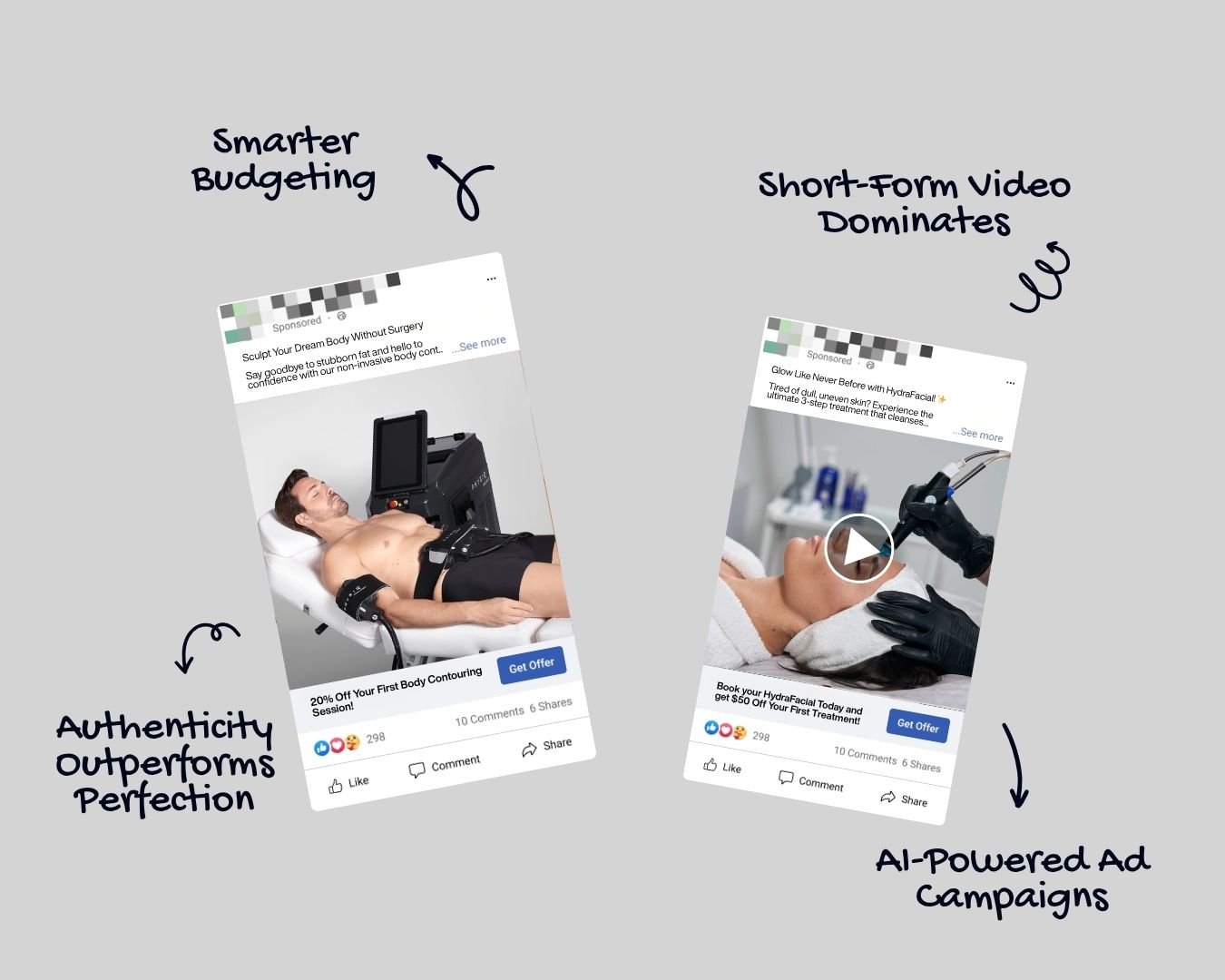
2. Short-Form Video Dominates (Again)
If 2024 was the year of video, 2025 has made it the king of med spa ads. Platforms like Instagram Reels, YouTube Shorts, and TikTok are driving massive engagement, especially for aesthetic treatments that benefit from visual storytelling.
What’s trending:
Before-and-after transformations presented in 10–15 seconds
“Day in the clinic” reels that humanize your practice
Quick Q&A videos with your injector or aesthetician answering common skincare questions
Short-form video ads are not only attention-grabbing — they also build trust. Seeing real results, real staff, and authentic behind-the-scenes moments makes viewers more likely to book a consultation.
Pro tip: Focus on education first, promotion second. For example, instead of saying “Book your microneedling now,” start with “Here’s how microneedling rebuilds collagen naturally — and why patients love it.” Then include a soft call to action.
3. Local SEO + Paid Ads = The Perfect Pair
In 2025, visibility is everything — especially for local searches. Combining Google Ads with local SEO ensures your med spa appears when high-intent users are searching nearby.
Example:
When someone types “laser hair removal near me,” the med spa that dominates both paid search and organic Google Maps listings captures the majority of those clicks.
To maximize visibility:
Invest in Google Local Service Ads to appear at the top of search results.
Use geo-targeted Google Ads for treatments popular in your area (e.g., “CoolSculpting in Miami”).
Optimize your Google Business Profile with fresh posts, updated photos, and consistent NAP (name, address, phone) information.
Pro tip: Include your city or neighborhood name in ad headlines, such as “Top Med Spa in Chagrin Falls” or “NYC Botox Experts You Can Trust.”
4. AI-Powered Ad Campaigns Are Here to Stay
AI isn’t just a buzzword anymore — it’s transforming how med spa ads are created, optimized, and measured. Smart campaigns on Google and Meta automatically adjust bids, placements, and creative combinations based on real-time performance data.
How med spas use AI effectively:
Auto-generate ad variations to A/B test images, headlines, and CTAs
Predict which leads are most likely to convert
Use AI chatbots on landing pages for instant patient engagement
Platforms like Meta Advantage+ are making it easier than ever to run campaigns that learn and improve on their own. By letting AI handle optimization, your team can focus more on strategy, storytelling, and client experience.
Pro tip: Don’t rely solely on automation — monitor your campaigns weekly. AI is powerful, but human insight keeps your brand voice consistent and compliant.
5. Authenticity Outperforms Perfection
Overly polished stock images and scripted ads no longer resonate with modern consumers. In 2025, authenticity wins. Patients want to see real people and real results.
What works best now:
User-generated content (UGC) from happy clients sharing their experience
Short testimonials recorded in natural settings
Team members introducing themselves casually on video
This approach makes your med spa feel more approachable, trustworthy, and relatable — three things that drive conversions.
Pro tip: Encourage satisfied patients to share a short video or selfie review after their appointment. Offer a small incentive like a free add-on or discount for future visits. Then repurpose this UGC for both organic and paid ads (with permission, of course).
6. Storytelling Ads That Educate and Inspire
People don’t just buy treatments — they buy transformation. The best med spa ads in 2025 focus on the emotional journey of self-care, confidence, and rejuvenation.
Try these storytelling frameworks:
Before/After/After: Show the physical transformation and the confidence boost that follows.
Myth-Busting Ads: Address misconceptions (“Lasers aren’t just for wrinkles — they also treat pigmentation!”).
Educational Explainers: Simplify complex treatments using visual metaphors or short animations.
Educational storytelling not only builds trust but positions your clinic as a thought leader in aesthetics — boosting both conversions and long-term loyalty.
7. Omnichannel Advertising Builds Stronger Connections
Patients don’t book an appointment the first time they see your ad — they usually interact with your brand across multiple channels before taking action. That’s why omnichannel marketing is a cornerstone of successful med spa ads in 2025.
According to Google, brands that maintain a consistent presence on at least four platforms (such as Meta, Google, YouTube, and email) see significantly higher engagement and conversion rates than those relying on just one or two. The key is consistency — your message, visuals, and tone should align seamlessly across every platform.
Example patient journey:
A user watches your Botox® Reel on Instagram.
Later, they Google your med spa and see a Google Ad promoting a consultation offer.
They visit your website and get retargeted the next day with a reminder ad.
Finally, they book after seeing a patient testimonial video in their Facebook feed.
By connecting these touchpoints, you build familiarity and trust — two essential factors in motivating patients to book.
Pro tip: Use tracking tools like Meta Pixel and Google Analytics 4 to monitor where your leads come from and how they interact with your med spa ads. This data helps you identify which channels drive the most conversions so you can focus your budget where it matters most.
8. Data Privacy and Compliance Matter More Than Ever
As digital advertising evolves, so do privacy laws and platform restrictions. Between Meta’s data-sharing limitations and Google’s cookie phaseout, med spas must focus on transparent, compliant marketing strategies to protect both their reputation and their patients’ trust.
Action steps for compliant med spa ads:
Collect first-party data. Build your own database through email opt-ins, online booking forms, and loyalty programs instead of relying solely on third-party cookies.
Be clear and honest. Always disclose promotions, disclaimers, and treatment details within your ad copy to ensure full transparency.
Avoid tracking on sensitive pages. To stay HIPAA-compliant and protect patient privacy, never place tracking pixels or tags on pages that contain personal or medical information.
By prioritizing data protection, your med spa not only meets industry regulations but also strengthens patient confidence. Building trust through transparency isn’t just about compliance — it’s also a long-term branding advantage that helps your clinic stand out from less professional competitors.
9. AI-Powered Lead Management for Better Conversions
Running successful med spa ads is only half the battle — capturing and nurturing leads efficiently is just as important. For example, our AI-powered CRM helps with lead management, allowing your practice to automatically track every inquiry generated from your campaigns. The system assigns follow-up tasks, sends timely automated responses, and nurtures potential patients through personalized communication.
By ensuring no lead is ever overlooked and engagement happens at the right moment, AI-driven CRM solutions significantly increase the likelihood of turning clicks into booked appointments.
10. Smarter Budgeting
With AI-driven insights and cross-platform retargeting, med spas can now allocate budgets more efficiently and maximize ROI from their med spa ads. Depending on the campaign type — whether awareness, retargeting, or conversion-focused — tracking 4–5 key KPIs (like cost per lead, click-through rate, return on ad spend, engagement rate, and conversion rate) is enough to stay aligned with your goals.
This data reveals which ads, platforms, and audiences perform best, allowing you to reallocate your budget toward the campaigns that truly drive results.
Conclusion
The world of med spa ads is more dynamic and data-driven than ever. To stay competitive in 2025, your aesthetic practice needs to embrace personalization, leverage AI tools, create authentic content, and tell stories that emotionally connect with your audience.
If you want expert guidance to take your med spa ads to the next level, Filia Digital can help with strategic campaign planning, audience targeting, ad creative, conversion-focused landing pages, and AI-powered optimization. Schedule a consultation today and start turning your marketing into measurable results.